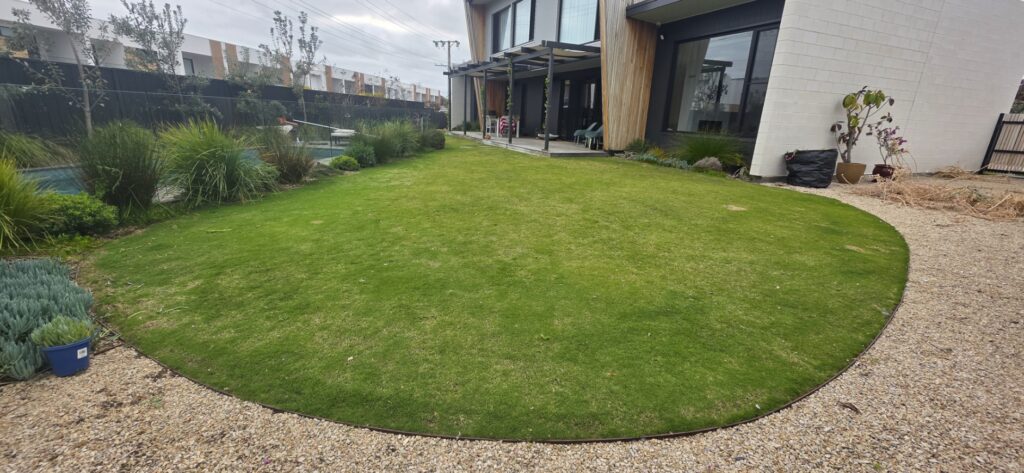
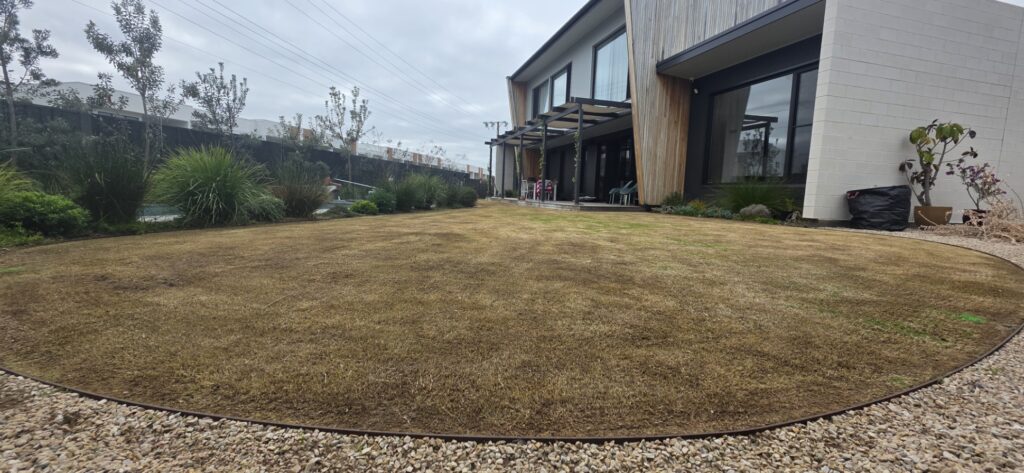
We scarify from mid September through to late February. That’s when the lawn’s actively growing, so it recovers quick once the thatch is out.
What scarifying does
Over time a layer of dead grass and runners builds up under the lawn, called thatch. It stops water, air and fertiliser getting down to the roots. Scarifying cuts down through the crown level and pulls that layer out. A mower on a low setting (scalping) can’t get through the crown, so it doesn’t do the same job.
Signs your lawn needs it
It feels spongy underfoot
It scalps easy when it’s mowed
Water sits on top or runs off instead of soaking in
It’s going brown or patchy even though you’re watering it
It’s been a few years since it was last done
Why the timing matters
If you scarify too early, the lawn hasn’t woken up yet and sits bare for weeks. Too late and it’s going into the cooler months without enough growth to fill back in. Spring to summer gives it the best run.
Before
Straight after scarifying
What we do after
Scarifying is usually part of a full lawn renovation. That’s scarifying, aeration, fertiliser and wetting agents, all done together so the lawn comes back thicker. Top dressing can be added on too if your lawn needs levelling. If it’s too far gone, we’ll tell you straight and talk about a turf install instead. See our scarifying service for more.
Got a lawn that’s looking tired? Fill out the quote form and we’ll take a look. More answers on our lawn care FAQs.