
Lawn aeration is the process of removing small plugs of soil from a lawn to improve the growth and health of the grass.
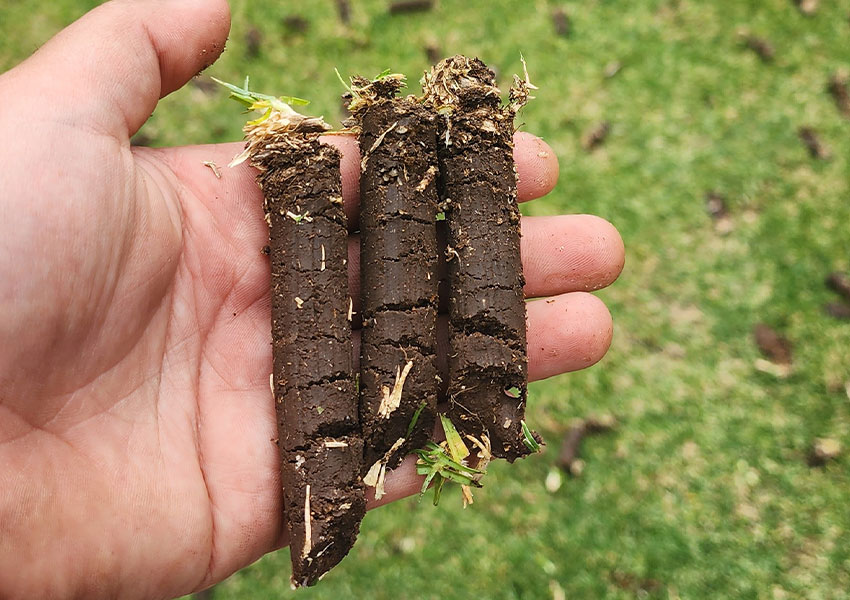
This is done by using a specialised tool called an aerator, which has hollow tines or spikes that penetrate the soil and remove small plugs of earth. These plugs of soil are then left on the surface of the lawn to decompose and enrich the soil, or they can be raked up.
The primary benefit of lawn aeration is that it improves the ability of water, air, and nutrients to reach the roots of the grass. When soil becomes compacted, it can become difficult for water and oxygen to penetrate the roots, which can lead to poor growth and a thin, unhealthy lawn.
By removing plugs of soil and creating small holes, aeration allows water, air, and nutrients to reach the roots more easily.
We cover a wide area around Adelaide – Check if we can come to you!
Aeration is usually done from spring through summer until mid-autumn, when grass is actively growing.
Your grass is working hard during this time to develop a stronger root system and aeration aids in that process. If you aerate during these seasons you allow pockets of air to transmit water and nutrients to the root system.
The best time to aerate your lawn will ultimately depend on the type of grass you have, as distinct types of grass have different growth patterns.
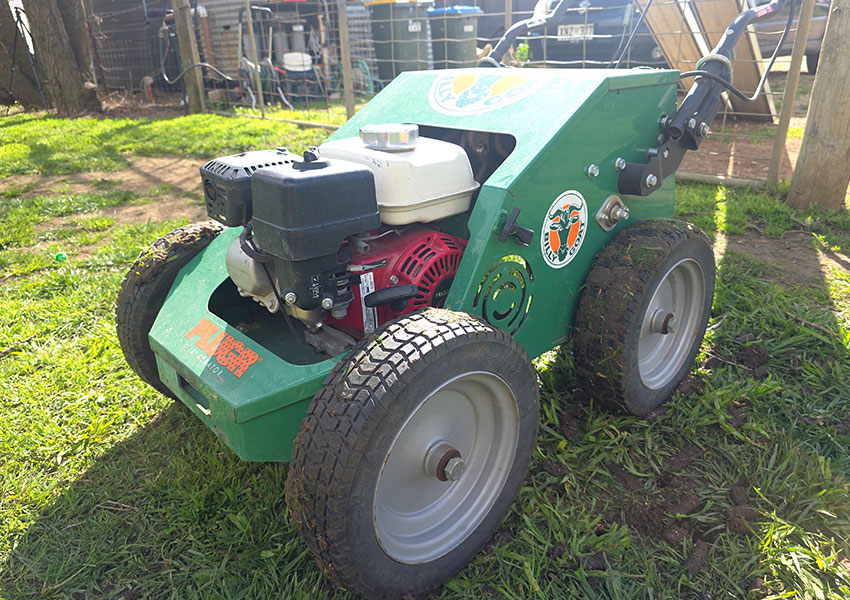
Aeration can be done manually by using a hand aerator or by using our powered machines.
Another advantage of aeration is that it can also help reduce thatch buildup. Thatch is a layer of dead and decomposing grass and other organic material that can form between the soil surface and the living grass.
While a small amount of thatch can be beneficial, too much can suffocate the grass and create a breeding ground for pests and disease. Aeration helps to break up thatch and promote healthy growth.
Overall, lawn aeration is an important practise for maintaining a healthy and attractive lawn.
It promotes root growth and improves water, air, and nutrient flow to the roots; it can also help reduce thatch buildup and create a lush, healthy lawn.
There are 2 types of aeration used for professional lawn management being solid tines or hollow tines.
Before understanding the differences between solid and hollow tines, it’s crucial to know what aeration does for the soil and turf.
Both solid tines and hollow tines will provide benefits. However, there are instances and applications where a solid or hollow tine may be a better fit.
The main goals of aeration include:
A solid tine is similar to a spike in that it punches holes into the soil but does not remove any turf or soil.
The positives of using solid tines include less disruption to the soil surface, ideal for quick aeration, and the fact that they can be used more for regular maintenance.
Solid tines, however, are less effective in eliminating deep soil compaction. If solid tine aeration is done without hollow tine aeration periodically it can lead to soil compaction over time. Solid tines also have limited thatch removal capabilities simply because of their design.
A hollow tine is a cylindrical tool used in turf grass maintenance that removes plugs of the soil profile and thatch. A hollow tine aeration aims to improve soil health and relieve compaction.
The hollow tines are more effective in relieving soil compaction, and they also significantly remove thatch. With a hollow tine aeration, water, nutrients, and oxygen can easily penetrate the soil.
Hollow tine aeration is disruptive to the turf surface and requires more clean-up work and longer recovery times. Hollow tine aeration is not always needed in turf areas with very light use.
Now that you understand what a solid and hollow tine is, let’s break down some critical differences and usage recommendations.
Hollow tine aeration is ideal when the turf enters or exits the growing season. Applications for hollow tine aeration typically occur during the spring or fall in areas with heavy foot traffic.
Solid tine aeration can be done more frequently, although typically used during the growing season. Solid tine aeration can (and should) be used as a regular maintenance practice to improve the health of the soil and turf.
Aspect | Solid Tines | Hollow Tines |
Mechanism | Punch holes into the soil without removing cores, creating smaller openings. | Remove cores of soil from the ground, creating larger holes. |
Soil Compaction Relief | Less effective for deep compaction; more suited for surface aeration. | Highly effective in relieving deep soil compaction. |
Thatch Removal | Limited thatch removal due to lack of soil extraction. | Excellent for removing thatch and soil, allowing for a significant exchange of soil and organic material. |
Soil Disruption and Turf Recovery Times | Less disruptive, turf recovers more quickly. | More disruptive, requiring a longer recovery time for the turf. |
Aeration Depth | Typically deeper tine aeration, impacting on sub surface layers. | Are more effective in relieving soil compaction due to a core being pulled |
Usage Frequency | It can be done more frequently as it is less intensive. | Less frequent; usually done 1-2 times per year due to the intensive nature of the process. |
Best Used For | Regular lawn maintenance, light-use areas, or as a supplement to hollow tine aeration. | Heavy-use areas, golf course greens, sports fields, and areas with significant soil compaction. |
Water/Nutrient Penetration | Moderate improvement in water, air, and nutrient penetration, mainly at the surface level. | Enhanced due to larger holes, facilitating deeper penetration of water, air, and nutrients. |
Ideal Conditions | Can be performed in a wider range of soil moisture conditions. | Best performed in moist conditions, avoiding very dry or very wet soils. |
The schedule and type of aeration is highly dependent on the facility and application. Some of the things to consider include:
Solid and hollow tine aeration should be combined with other lawn management practices. These include integration with fertilisation, weed control, top soil and mowing, as well as water management.